KTI Senegal | Ice plants for Senegal

In June 2021, KTI Senegal was founded as a subsidiary of the KTI Group. The first industrial ice plant with a production capacity of 10 tons was opened in Diourbel in November 2023. The commissioning of another flake ice plant at the fish market in Pikine is planned for January 2024. The targeted expansion and development of further locations is planned for the course of 2024.

Opening

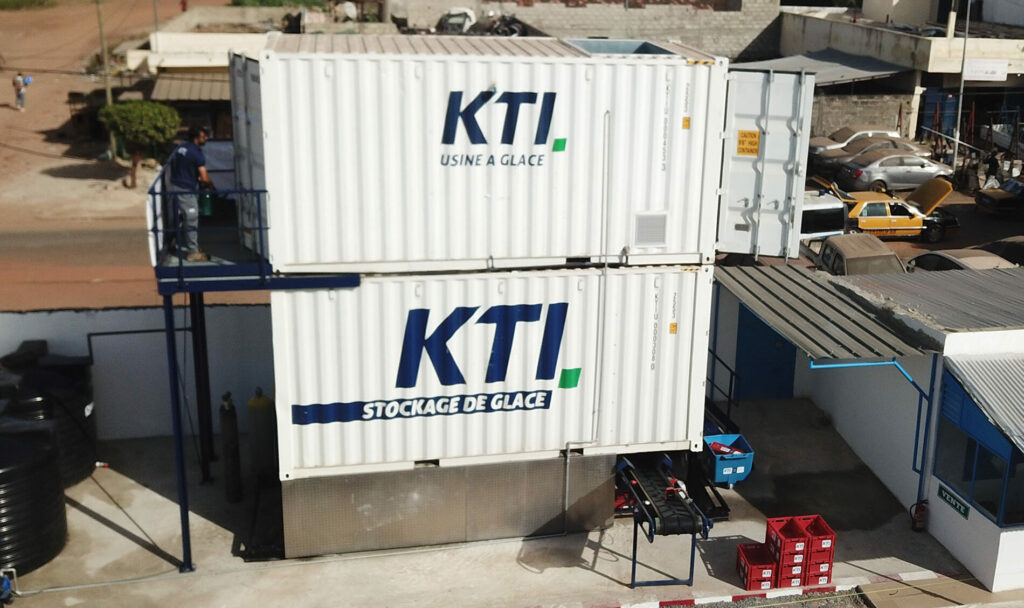
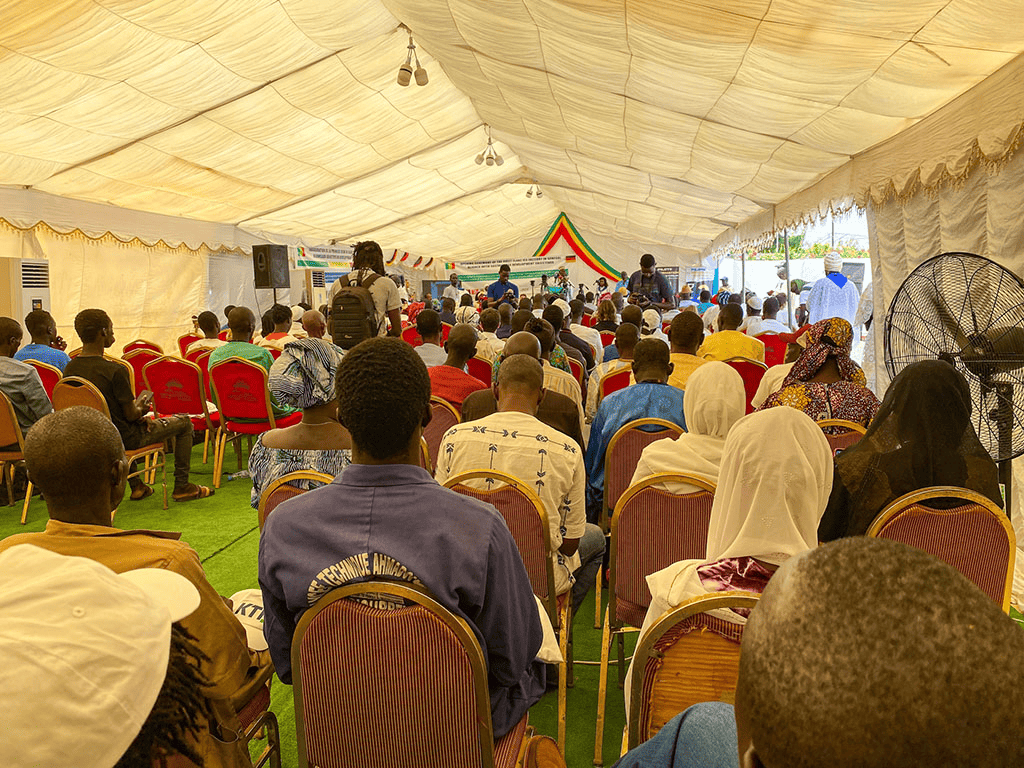
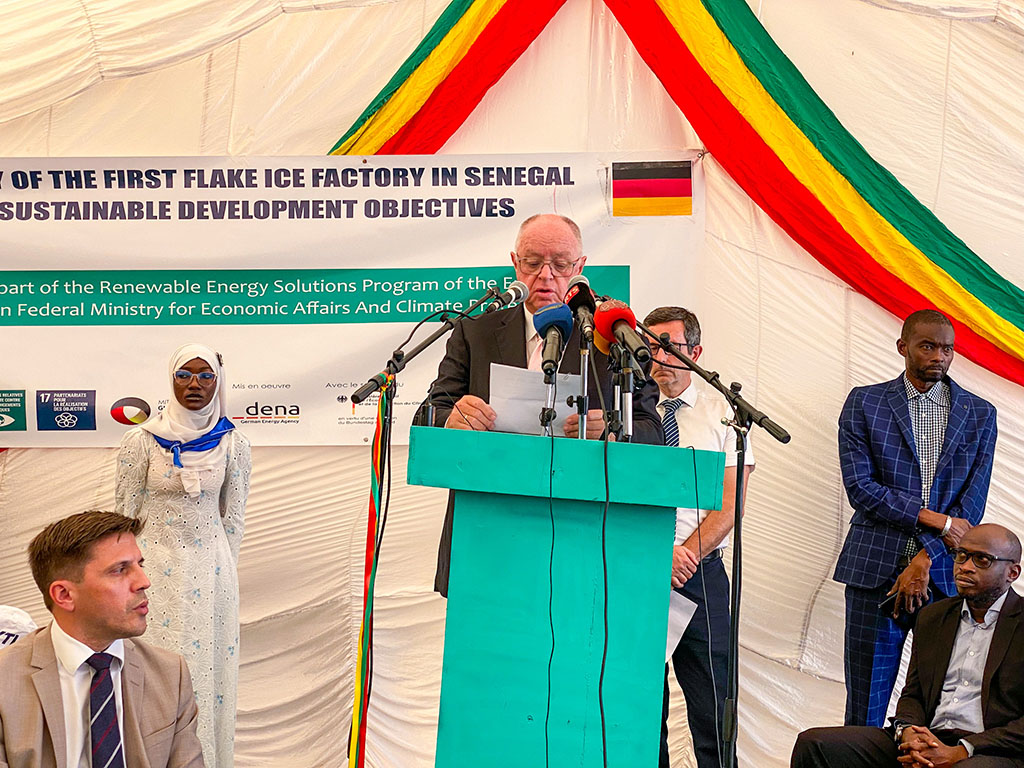
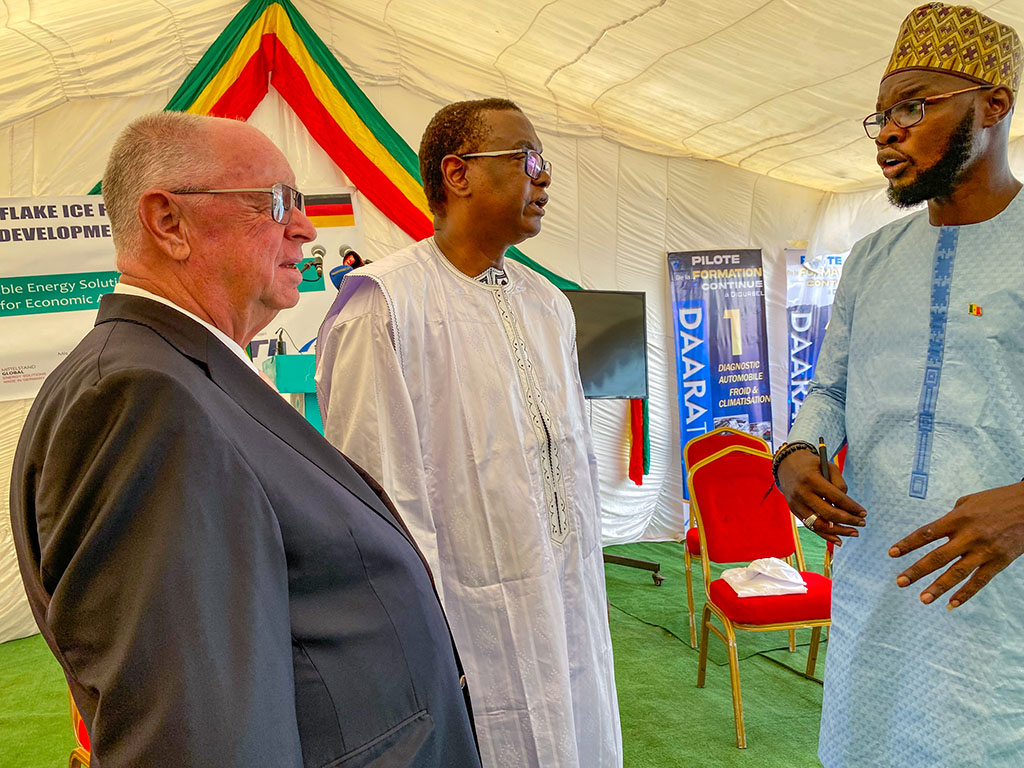
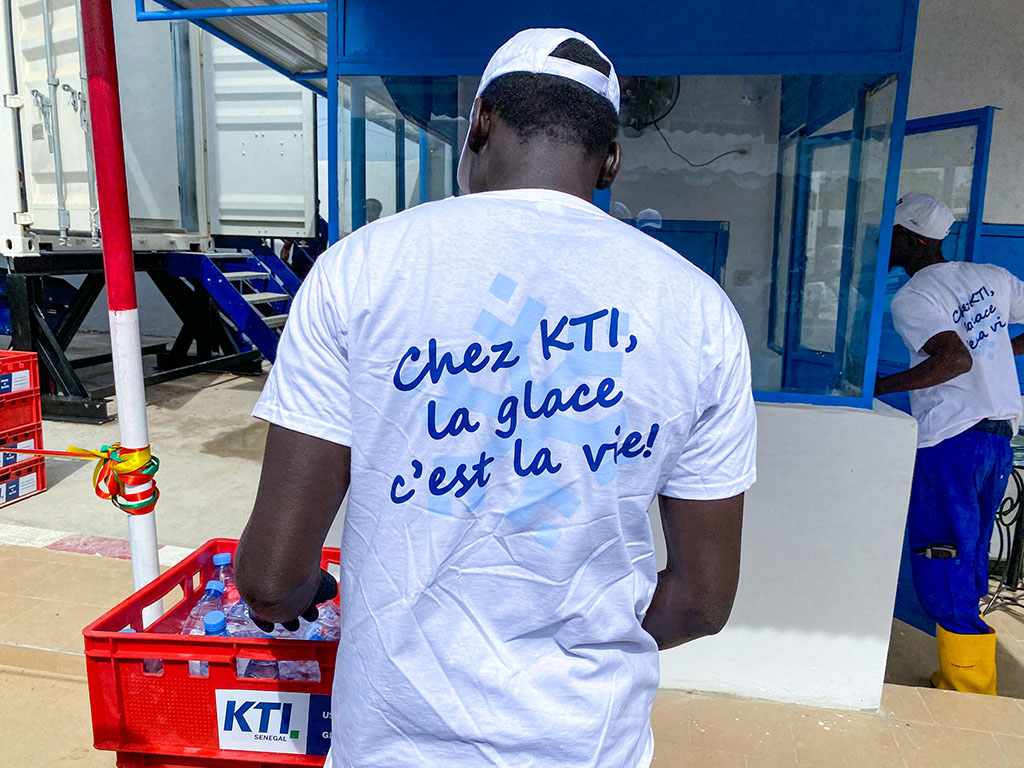
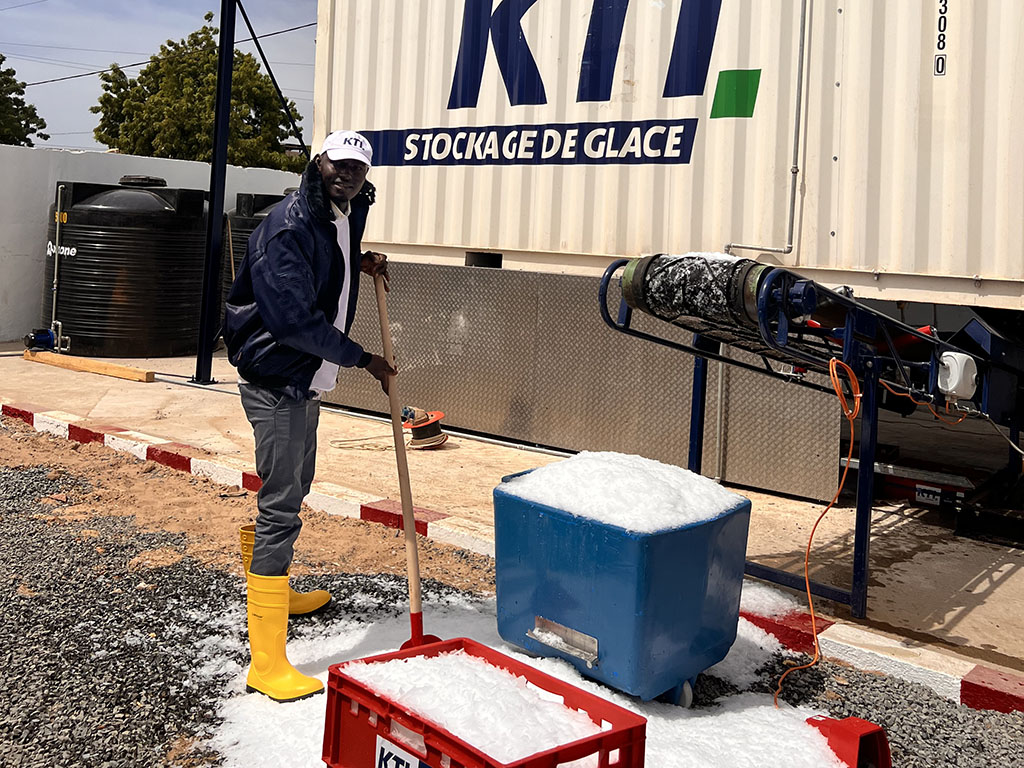
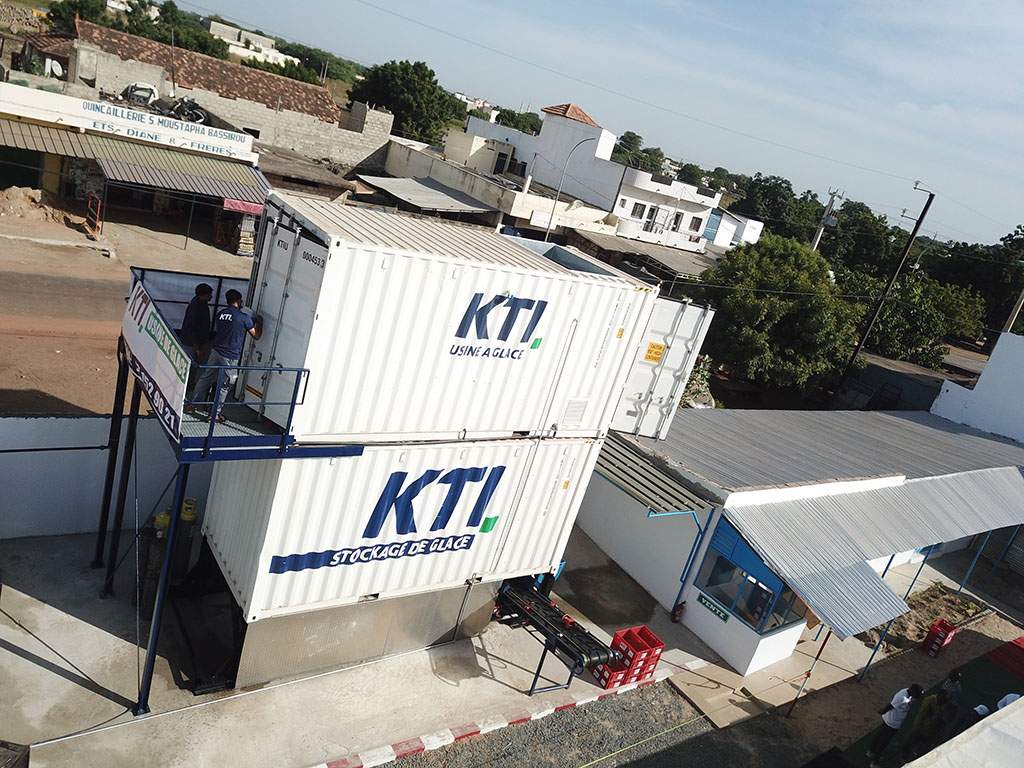
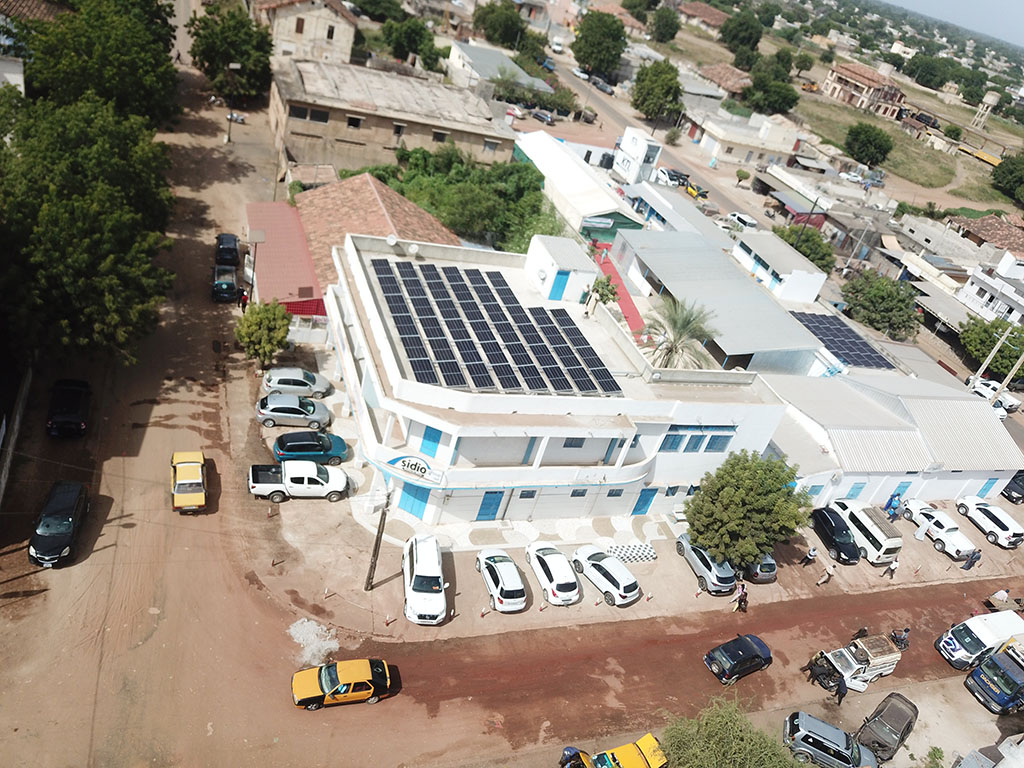
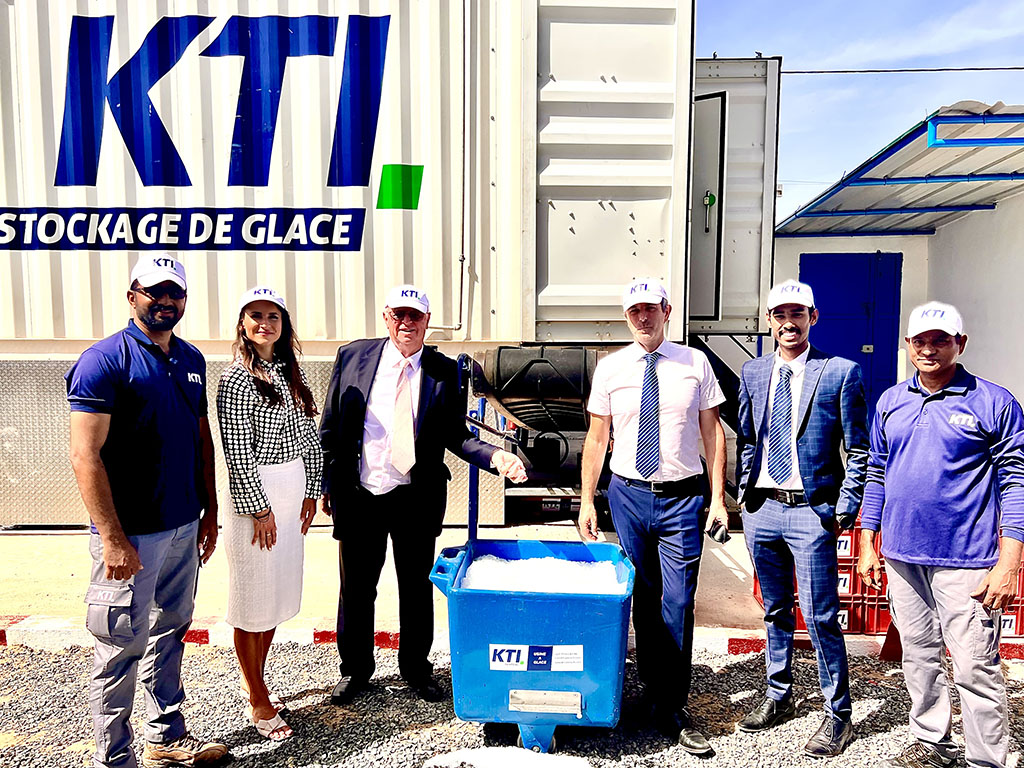
The opening of the first KTI ice plant on the Sidio Group site in Diourbel (Senegal) was celebrated on November 7, 2023. The KTI flake ice plant produces 10 tons of ice every day. Due to the technical design and the use of the natural refrigerant ammonia, this ice plant is very energy-efficient. A photovoltaic system was installed by the company Off-Grid Europe. This can be used to operate the ice plant during the day. Around 100 people attended the opening ceremony. Some political dignitaries and representatives from Diourbel, Dakar and Germany also took part. First there were some speeches. Then the ice plant was opened by Governor Ibrahima Fall and KTI President Rupert Plersch with a silhouette and a demonstration of ice production for the guests. The motto for the afternoon was: “Chez KTI, la glace c’est la vie!”. This project is being funded as part of the Renewable Energy Solutions program of the Energy Export Initiative of the Federal Ministry for Economic Affairs and Climate Protection.

Gallery​

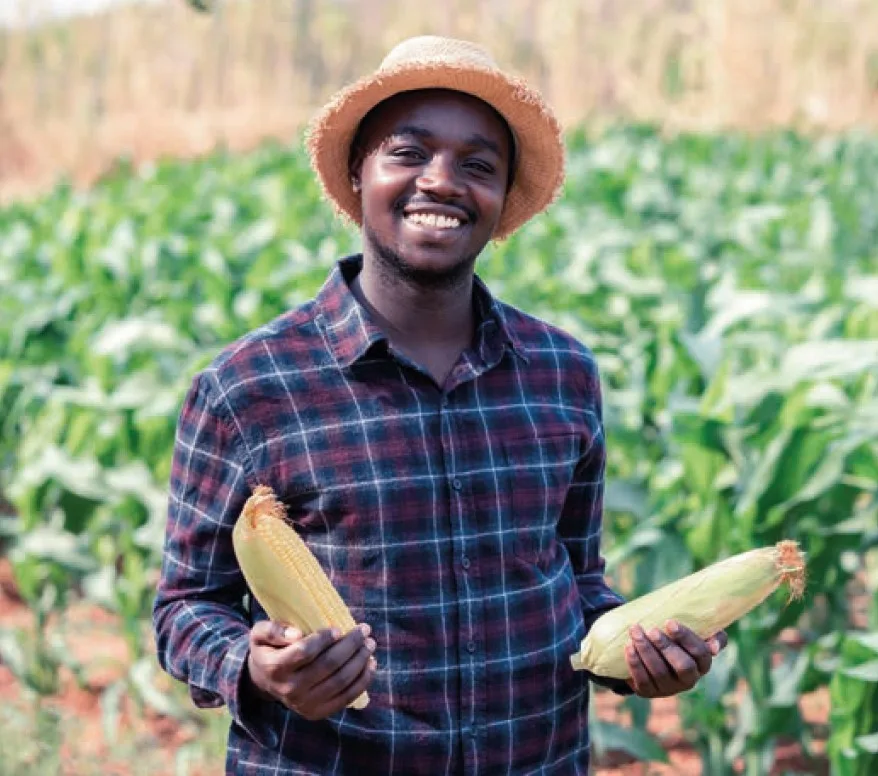
Food saved is just as important as food produced

“Food saved is just as important as food produced. 80% of the 828 million people affected by hunger in 2021 lived in rural areas. Yet 70% of food in Africa is produced by smallholder farmers who own 1-2 hectares of land but are among the world’s poor, living on less than 2 dollars a day. Interestingly, the food lost and wasted can feed 1.26 billion hungry people per year. In 2017, around 12 % of the food produced globally was lost due to the lack of efficient cold chains, 63 % of which was in low-income countries. The loss of food due to lack of cold chains is also estimated to cause emissions of 1 gigatonne of CO2 equivalent, which accounts for a third of total global emissions from food loss and waste.

Mary Najjuma

(PhD candidate at London South Bank University)

Advantages & features

The ice plants from KTI work by using components proven over many years equally reliable and efficient – even under the most demanding conditions. All ice plants are developed and manufactured at our site in Germany. We source the material only from tested suppliers. We choose all components very carefully. This leads to a long life, even under the toughest conditions. Customers thus benefit from a reliable and trouble-free operation.

Advantages

Energy-efficient and sustainable

Turnkey and modular

Environmentally friendly

Cost-effective

Natural refrigerants

40% less energy than Freon

ODP and GWP =0

Technical properties

Flake ice production: 10 tons per day

Water inlet temperature: < 25°C

Max. Ambient temperature: 45°C

Refrigerant: R717 (ammonia, NH3)

Engine room: 20-foot container

Ice storage: 20-foot container (insulated) Automatic loading, manual emptying

Ice storage temperature: -5°C

German Energy Agency (dena)

The German Energy Agency (dena) is a centre of excellence for the applied energy transition and climate protection. dena studies the challenges of building a climate-neutral society and supports the German government in achieving its energy and climate policy objectives. Since its foundation in 2000, dena has worked to develop and implement solutions and bring together national and international partners from politics, industry, the scientific community and all parts of society. dena is a project enterprise and a public company owned by the German federal government. dena’s shareholder is the Federal Republic of Germany. www.dena.de/en www.dena.de 

German Energy Solutions Initiative 

With the aim of positioning German technologies and know-how worldwide, the German Energy Solutions Initiative of the Federal Ministry of Economics and Climate Action (BMWK) supports suppliers of climate-friendly energy solu-tions in opening up foreign markets. The focus lies on renewable energies, energy efficiency, smart grids and storage, as well as technologies such as power-to-gas and fuel cells. Aimed in particular at small and medium-sized enterpris-es, the German Energy Solutions Initiative supports participants through measures to prepare market entry as well as to prospect, develop and secure new markets. www.german-energy-solutions.de/GES/Navigation/EN/Home/home.html www.german-energy-solutions.de
Renewable Energy Solutions Programme (RES Programme)

With the RES programme, the German Energy Solutions Initiative of the Federal Ministry of Economics and Climate Action (BMWK) helps German companies in the renewable energy and energy efficiency sectors enter new markets. Within the framework of the programme, reference plants are installed and marketed with the support of the Ger-man Energy Agency (dena). Information and training activities help ensure a sustainable market entry and demon-strate the quality of climate-friendly technologies made in Germany. www.german-energy-solutions.de/GES/Redaktion/EN/Basepages/Services/dena-res.html https://www.german-energy-solutions.de/GES/Redaktion/DE/Dossiers/res-programm.html

This project is supported by the German Federal Ministry for Economic Affairs and Climate Action as part of the Renewable Energy Solutions Programme of the German Energy Solutions Initiative.